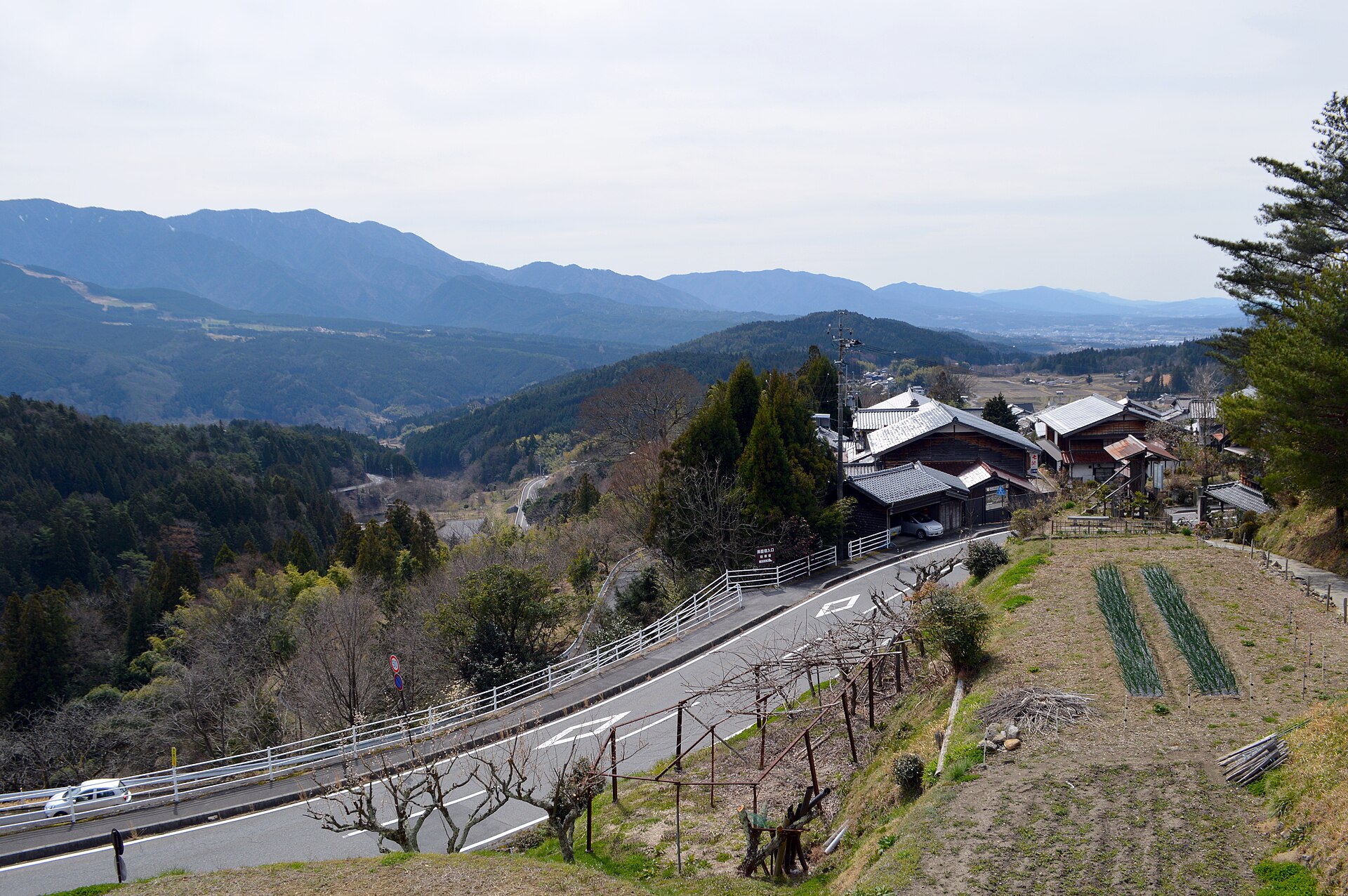
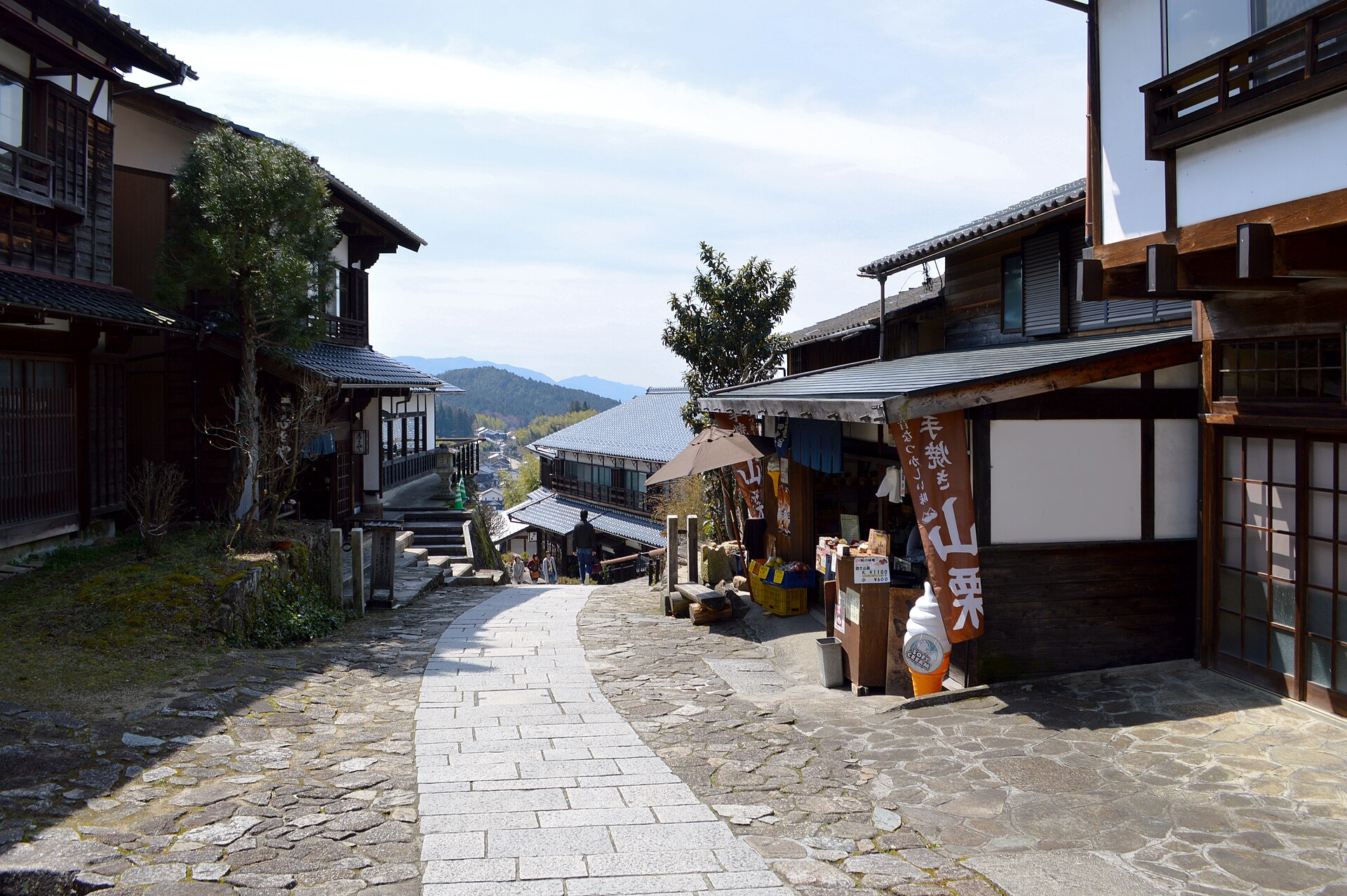
Magome's stone ramp
VIEWPOINT · WATERMILL · 801 M PASS
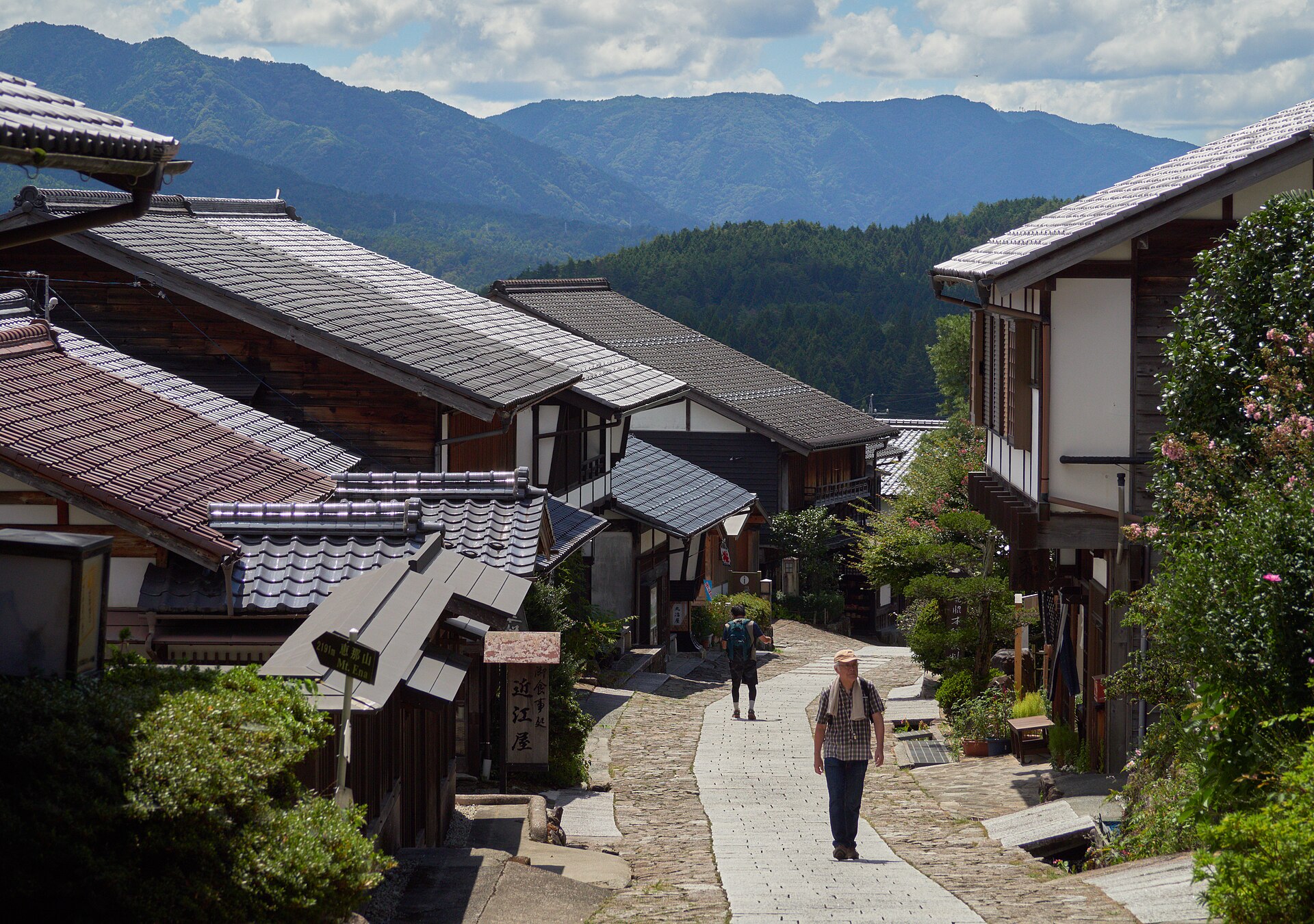
The sister post town climbs its hill in paved switchbacks, Mount Ena behind. Fill water bottles, buy walking snacks, ring the first bear bell.
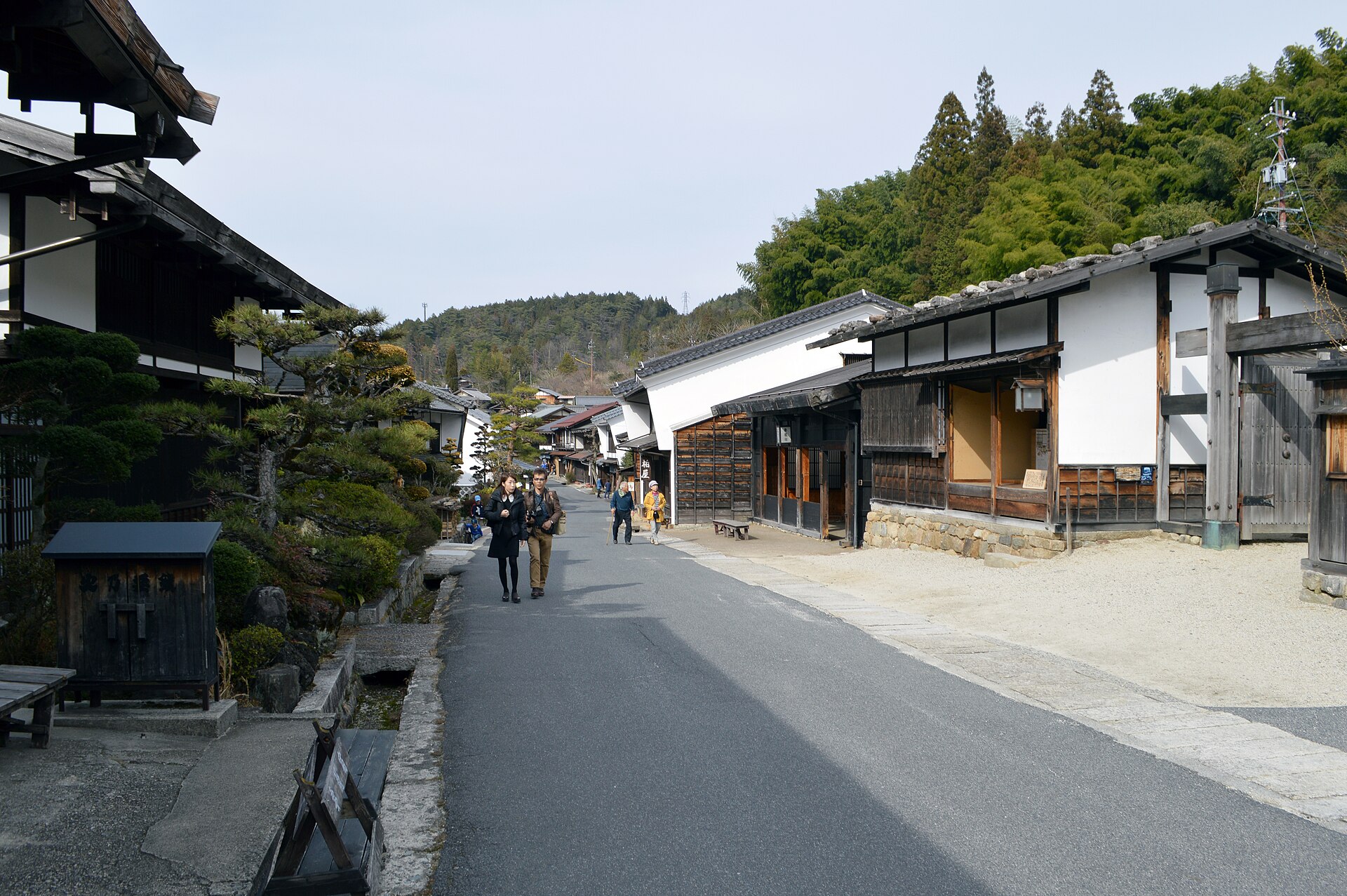
Four hundred years ago, this dark-timbered street fed and lodged travellers on the great inland highway between Kyoto and Edo. It still does. One preserved village, one mountain pass, one unforgettable walk from Magome, and an evening by the hearth after the day-trippers leave.
In 1968, when the rest of Japan was pouring concrete, Tsumago's residents chose the opposite: they buried the power lines, restored every facade, banned daytime traffic and bound themselves to a charter, don't sell, don't rent, don't destroy. Fifty years on, their street is the closest thing to walking into an Edo woodblock print.
MAIN STREET IS CAR-FREE BY DAY · MUSEUMS CLOSE ~17:00 · LANTERNS COME ON AT DUSK
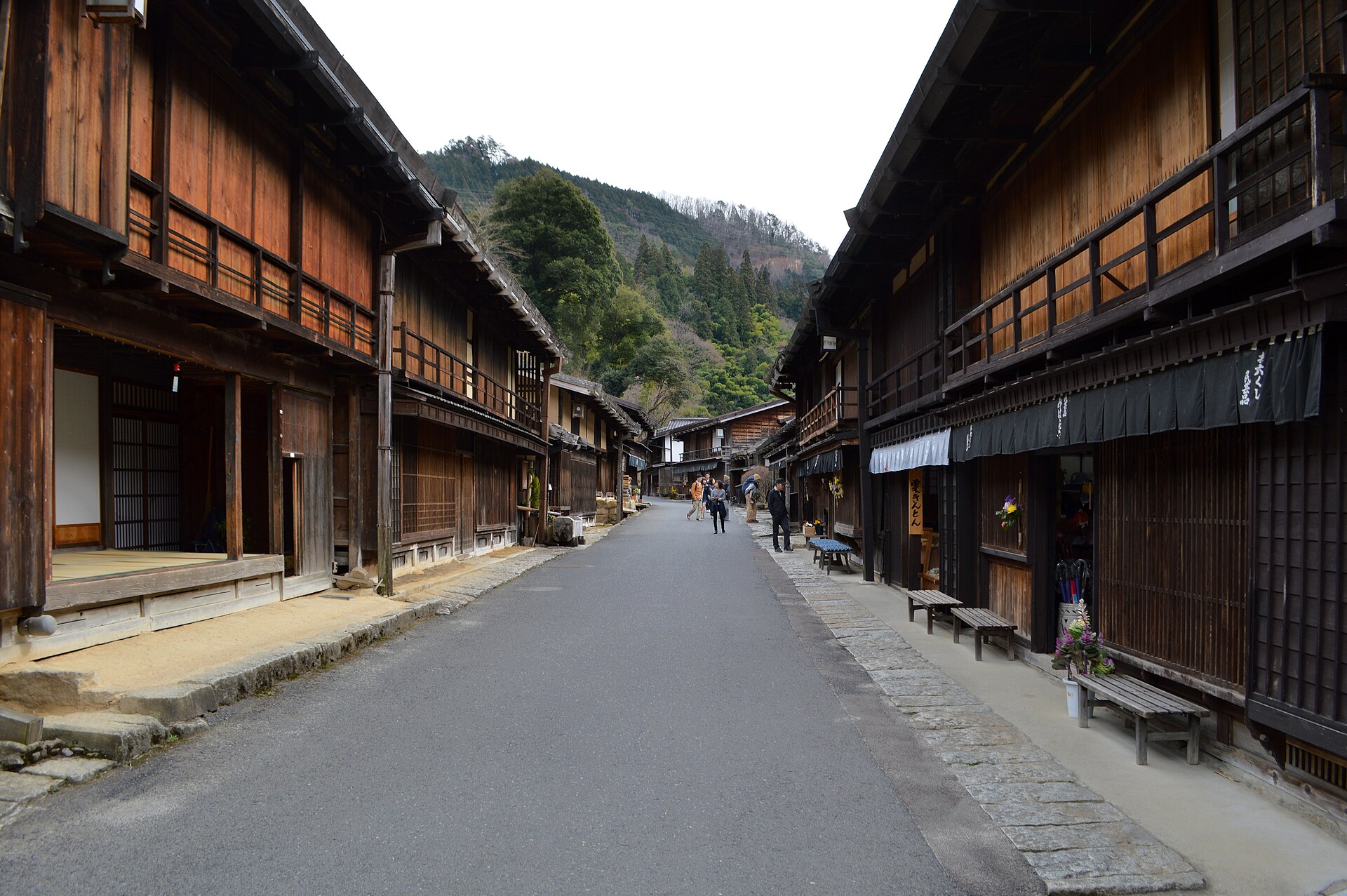
Lattice fronts, sake brewers' cedar balls, shop curtains breathing in the wind. The restored honjin and waki-honjin inns, where daimyo processions once slept, anchor the walk; Emperor Meiji's rest room in the waki-honjin still smells of hinoki.
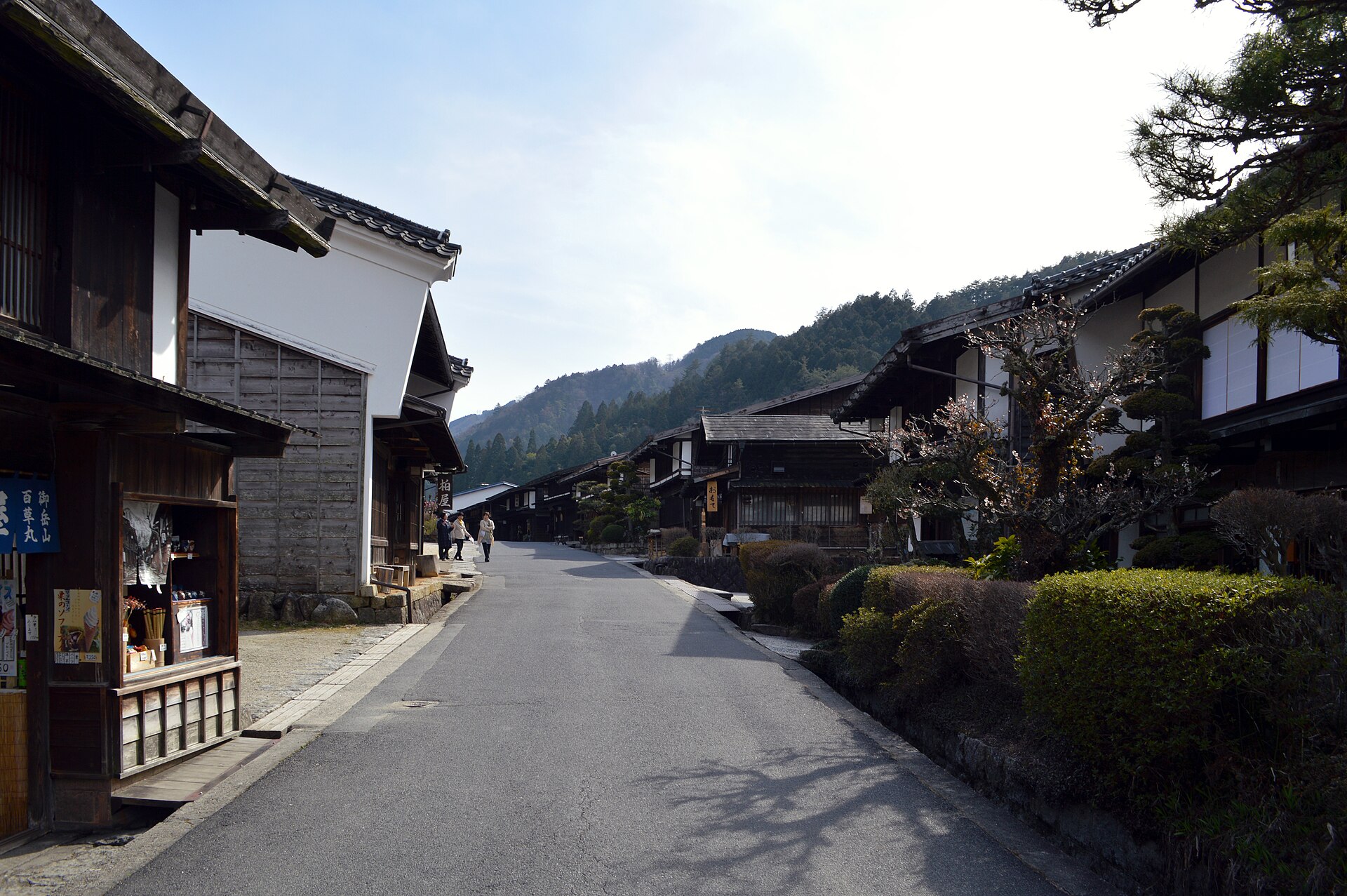
Water barrels against fire, sliding wooden doors, persimmons drying under eaves in autumn: the preservation is in the small things.
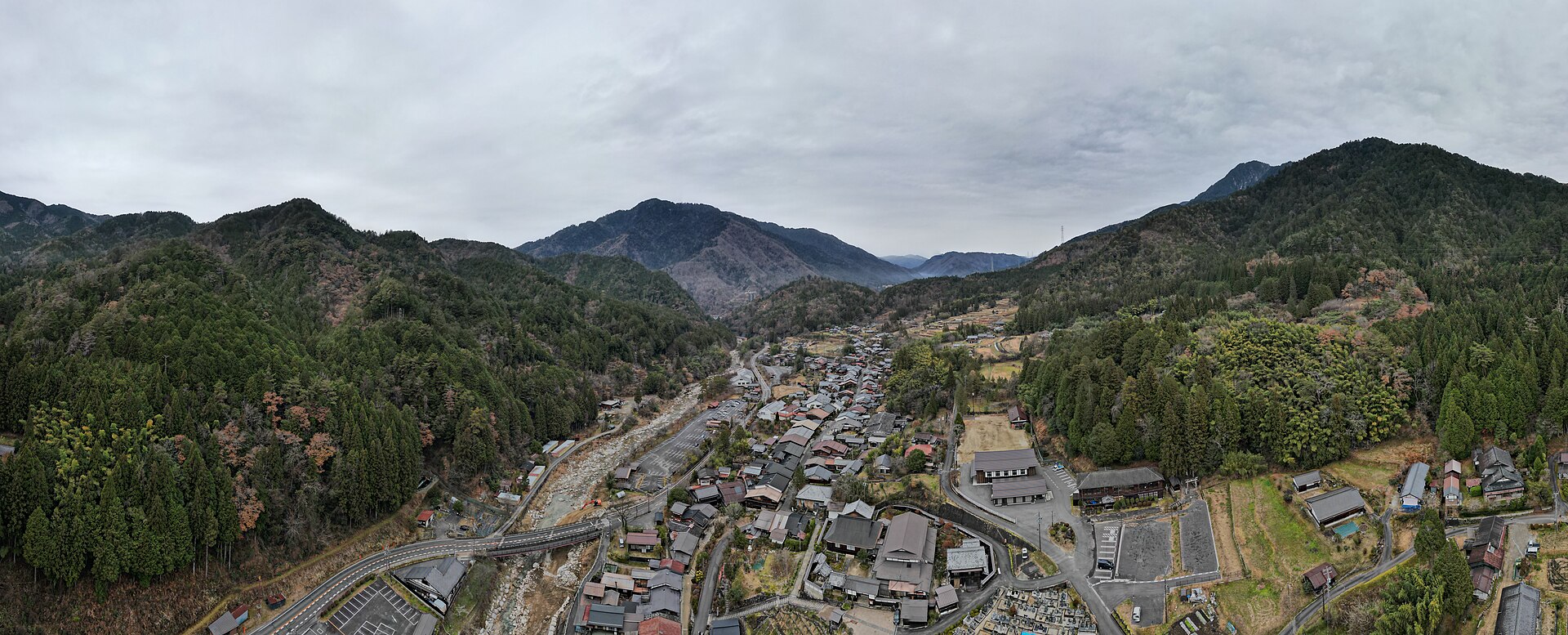
The village lies in a river bend under forested ridges, climb to the castle ruin viewpoint (20 min) for the woodblock composition.
The Nakasendo's most beloved surviving section crosses the Magome pass between two post towns: stone paving, cedar forest, teahouses, twin waterfalls, and bear bells to ring as you go. Walk it Magome→Tsumago for the kinder gradient, the full stage-by-stage guide is in the journal.
The sister post town climbs its hill in paved switchbacks, Mount Ena behind. Fill water bottles, buy walking snacks, ring the first bear bell.
Over the pass, the path drops into cryptomeria shade. The volunteer-run Tateba teahouse pours free tea around an open hearth, leave a coin, sign the book.
The trail becomes the village street without ceremony, the arrival travellers have made for four centuries. Luggage, if you forwarded it, is already at your inn.
At 17:00 the last bus leaves and Tsumago exhales. Overnight guests get the street to themselves, wood smoke, lanterns, stars over the ridgeline, and dinner around the irori hearth: river trout on skewers, mountain vegetables, and gohei-mochi, the Kiso's grilled rice cakes glazed with walnut-miso.
Mornings repay the favour: mist on the valley, shopkeepers sweeping, and two full hours of Edo before the first coach.
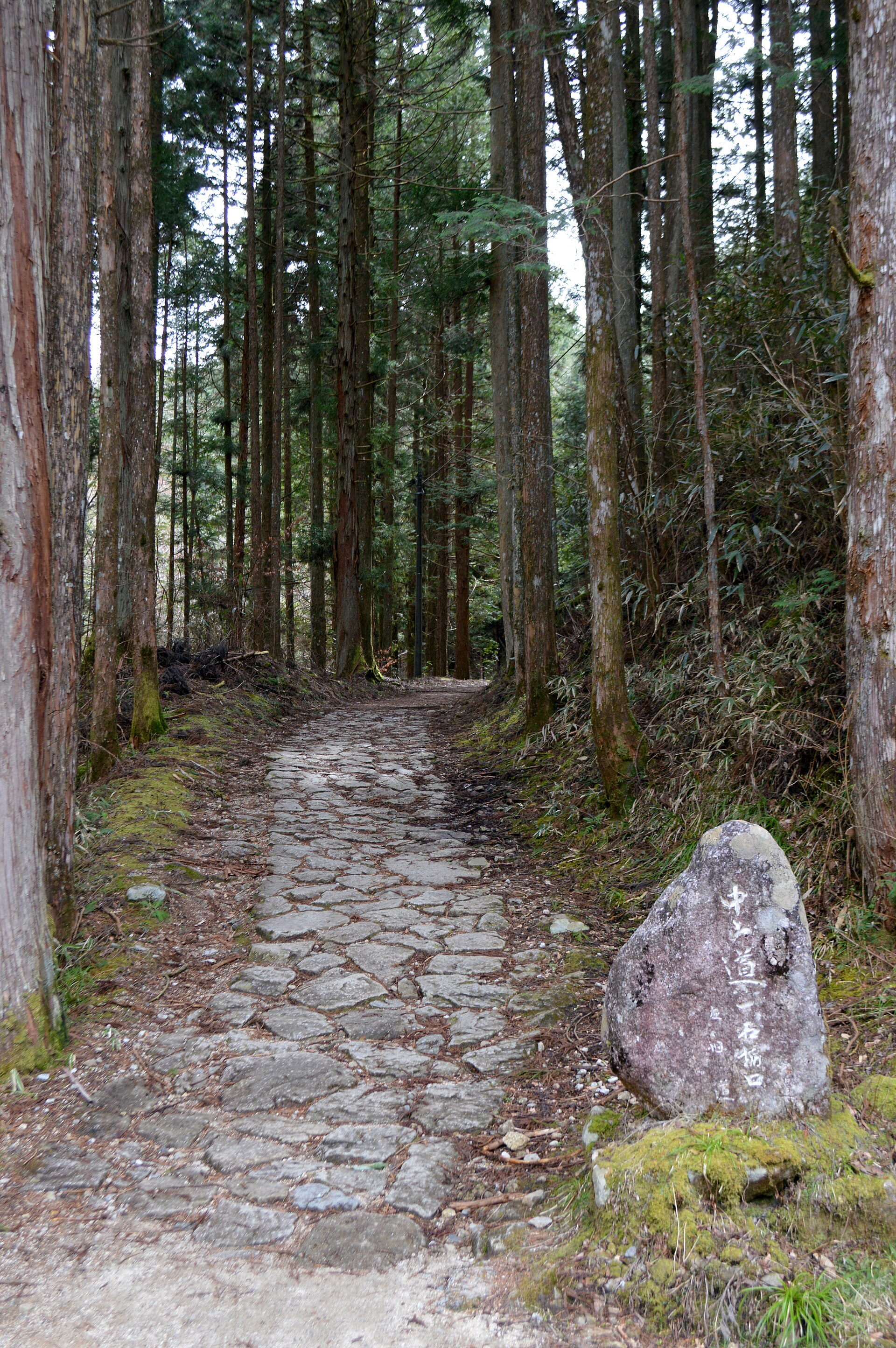
Twenty minutes up the old road at 07:00, dew on the stones, no footsteps but yours, is worth the whole trip.
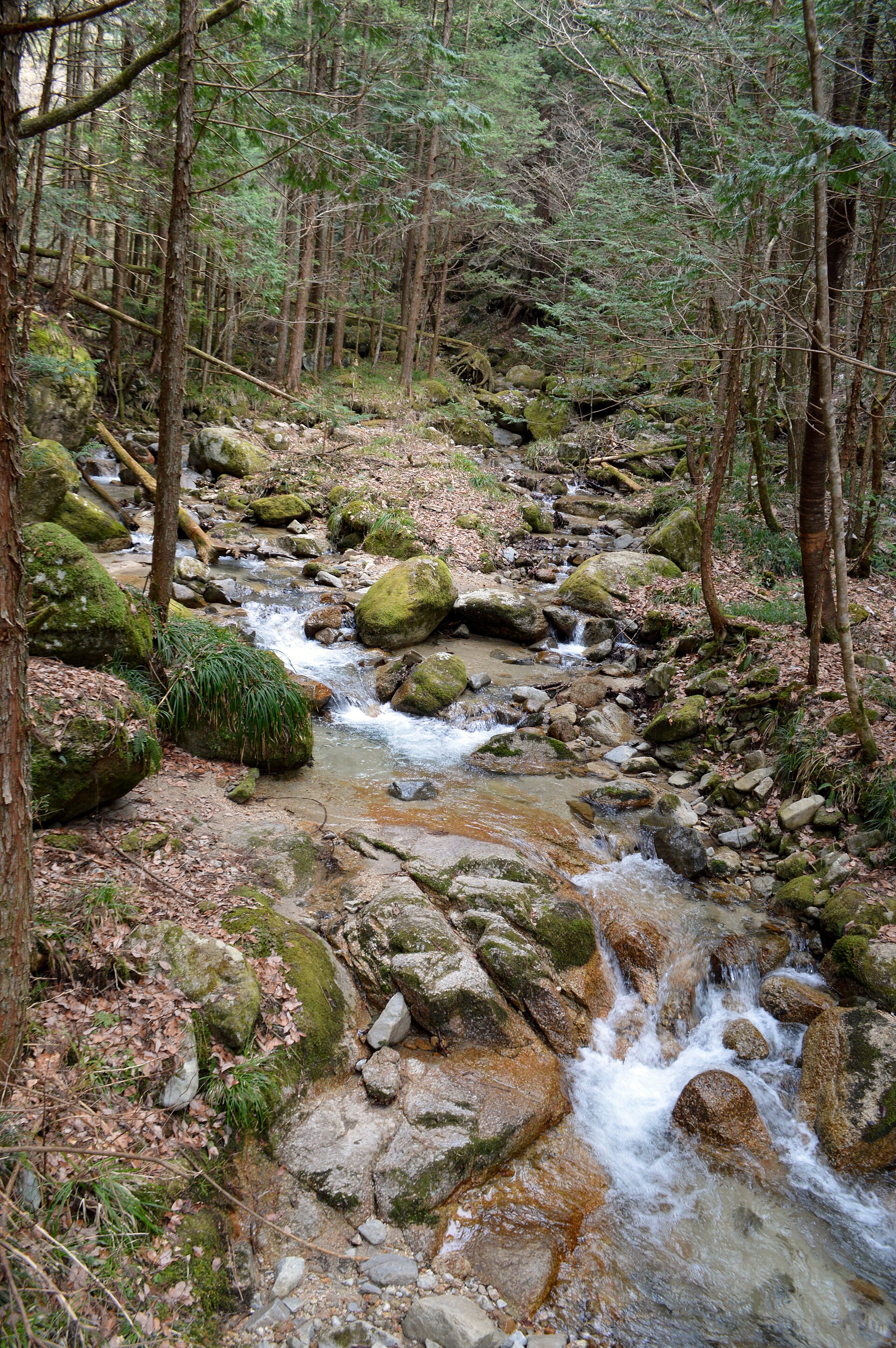
Channels gurgle along the street as they have since Edo, the village's original plumbing, still running.
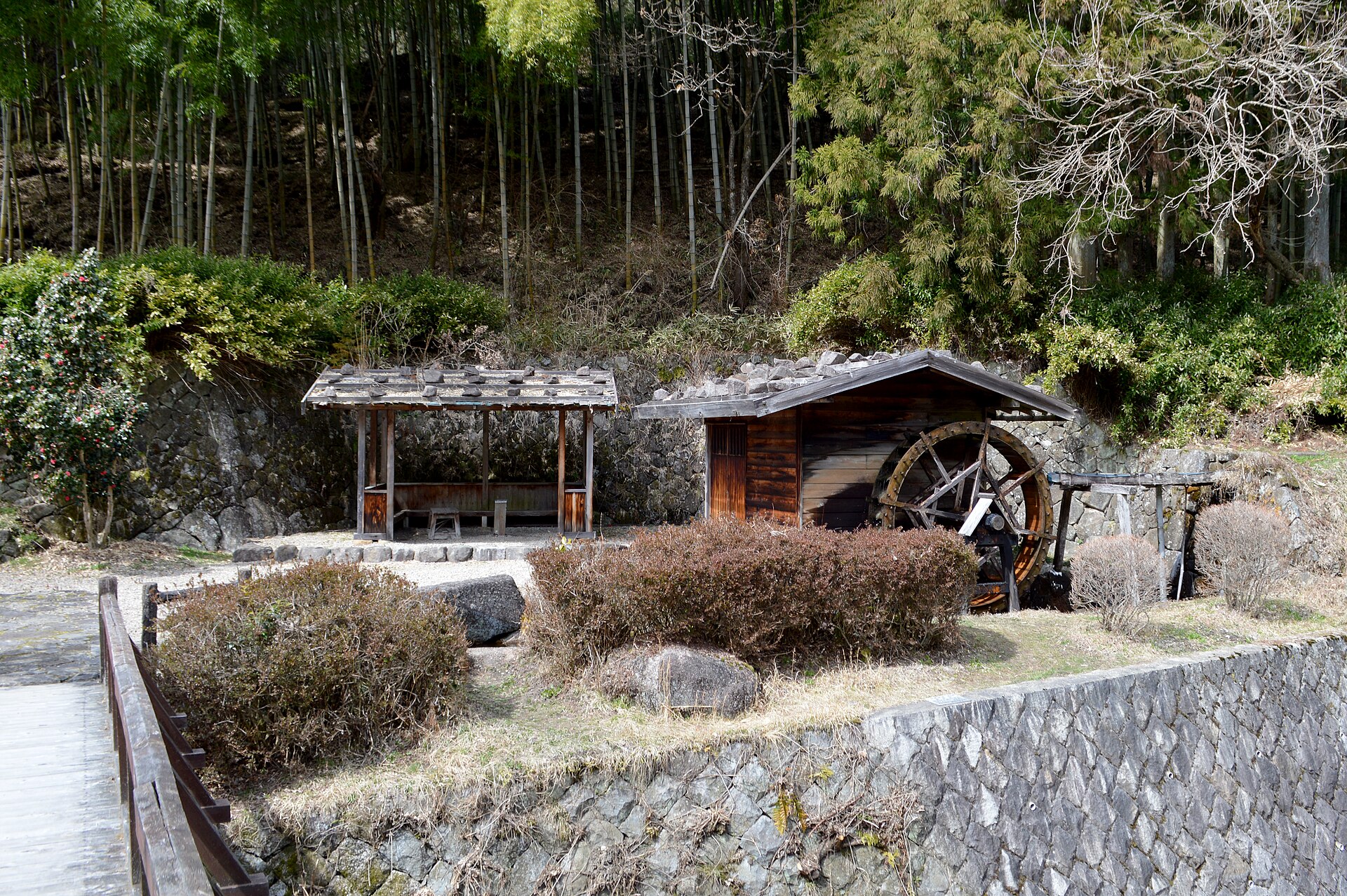
Staying in Magome instead? Its stone ramp empties at sunset too, with Mount Ena going pink at the top of the street.
Tsumago for the purest preserved night, Magome for sunset views and gentler access, Nagoya as the rail gateway on either side of the valley. In all three: book early for November.
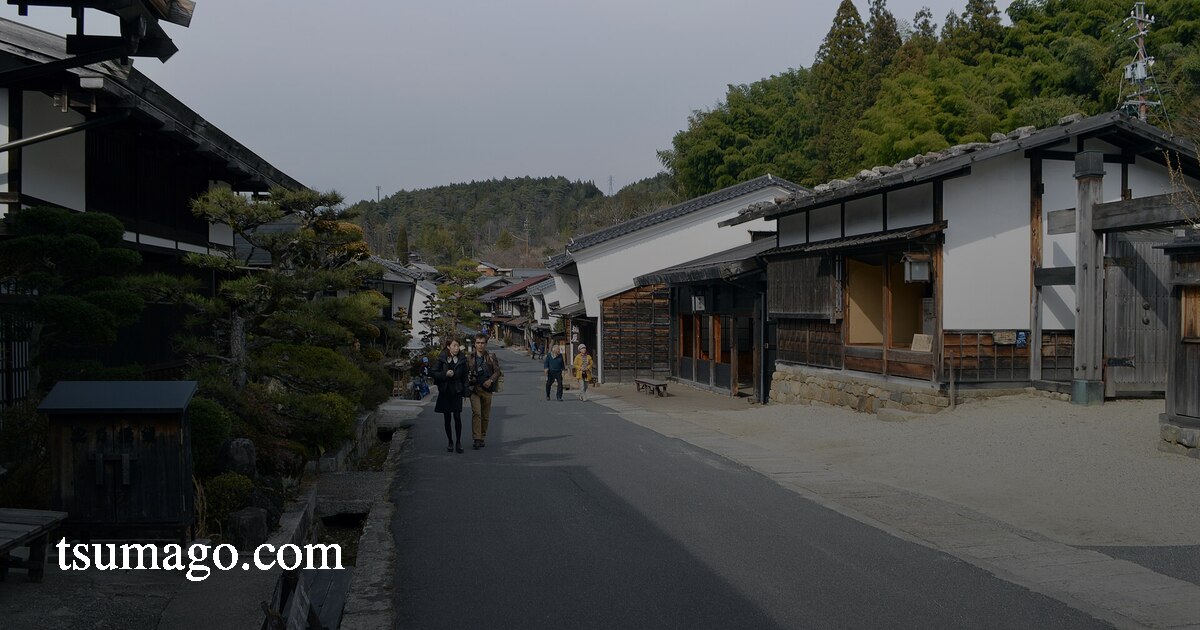
Only have time for one Kiso post town? Here's how Tsumago and Magome differ in character, crowds, and logistics, so you pick the right one.
A practical guide to visiting Tsumago in winter snow: what opens, what closes, how the trail changes, and how to dress, walk, and stay warm.
A walk-pace guide to Tsumago's autumn foliage: peak weeks, the best stretches of trail, crowd patterns, and where to stay along the Nakasendo.
A season-by-season guide to visiting Tsumago: weather, crowds, trail conditions, and what each month actually offers the walker.
A practical comparison of Tsumago, Magome and nearby Kiso Valley lodging: minshuku versus ryokan, prices, booking windows and who should sleep where.
A practical, walk-pace guide to reaching Tsumago by train and bus from Nagoya or Tokyo, with timing notes, approximate fares, and luggage options.
A realistic two-day Kiso Valley itinerary built around the Magome-Tsumago trail, post-town etiquette, and honest timings rather than rushed sightseeing.
A practical guide to booking and behaving in Tsumago's minshuku and ryokan: arrival times, futon routines, baths, meals and post-town courtesy.
How to extend the Magome-Tsumago walk into a two- or three-day Nakasendo trip: timing, towns, luggage, and seasonal notes for planning ahead.
A practical, minute-by-minute guide to the 8km Magome-Tsumago hike: timing, trail surface, luggage forwarding, and post-town etiquette along the Nakasendo.
Luggage forwarding, bear bells, the teahouse and the falls: the classic 8 km, timed and mapped in words.
Irori dinners, futon rooms and the etiquette that makes hosts smile, what to expect, honestly.
Narai, Kiso-Fukushima and the quieter post towns up the valley, extending the Nakasendo by rail.
The 42nd Nakasendo post station and Japan's first preserved townscape (1968): buried power lines, restored facades, daytime car ban, and the charter "don't sell, don't rent, don't destroy."
8 km over the 801 m Magome pass, 2.5-3 h, best walked Magome→Tsumago. Daily luggage forwarding in season; buses link both towns to the railway.
Day-trippers leave by 17:00. Evenings mean lanterns and irori dinners; mornings mean mist and empty Edo streets. Inns are small, book ahead.
JR Shinano from Nagoya to Nakatsugawa (bus to Magome) or Nagiso (bus or 40-min walk to Tsumago), ~50-70 min.
November color, April blossom, green summer mornings, snow-quiet winter. Trail open year-round; check off-season bus times.
Half-serious: bears live in these forests and the trailside bells exist to be rung. Ring them, enjoy it, and you'll see at most a monkey.