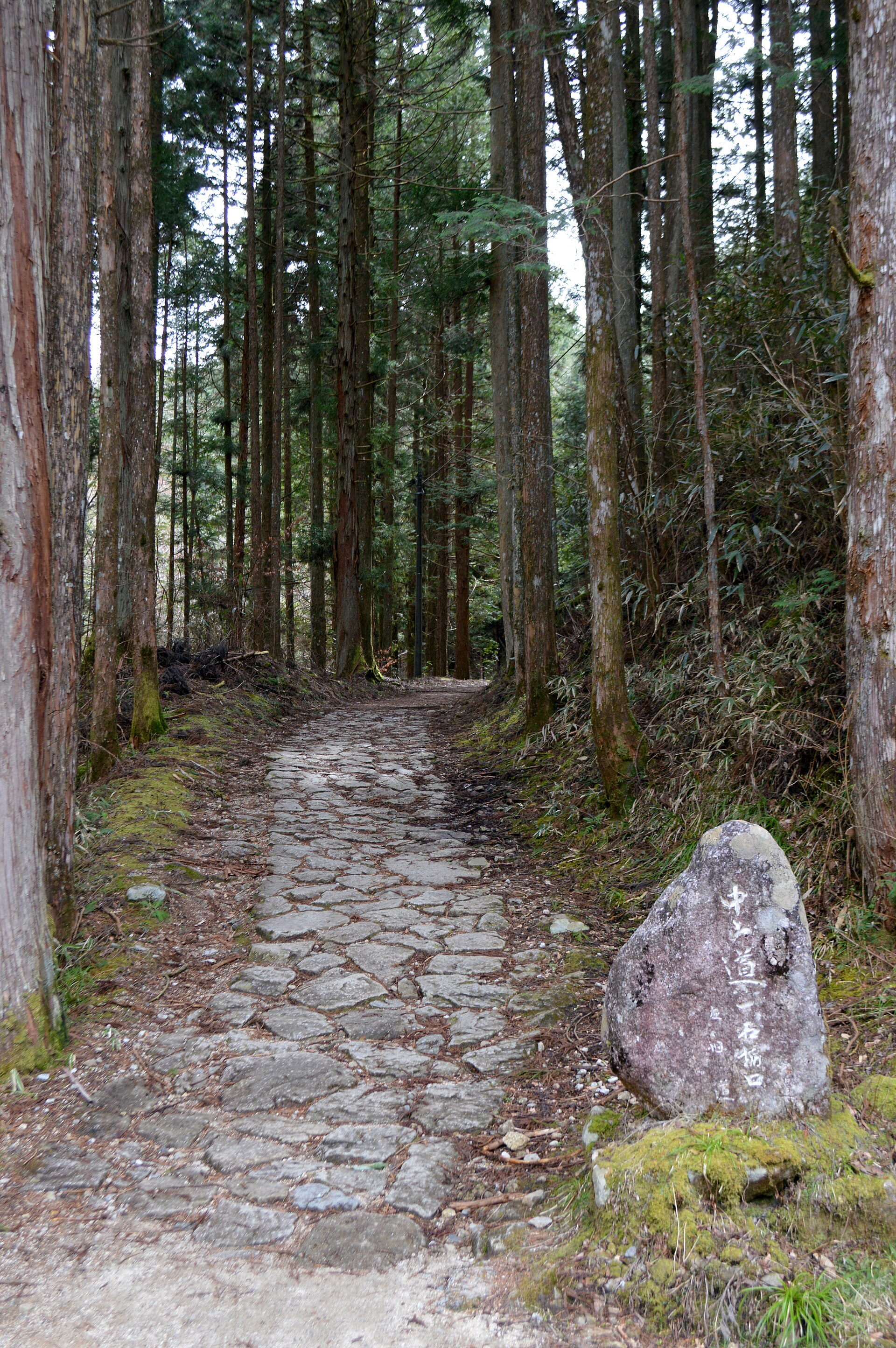
The walk from Magome to Tsumago covers roughly 8 kilometres of the old Nakasendo highway, climbing over a forested pass before dropping into the Kiso valley. Most travellers finish in under four hours, including stops at the waterfall and the rest hut near the pass. The direction matters: starting in Magome and finishing in Tsumago means more downhill than up, and it ends where the buses and the valley's last inns are. This guide breaks the walk into the segments you will actually feel underfoot, with the timing, the gear, and the etiquette that keeps a working post town pleasant for everyone.
The route in numbers
The marked trail measures about 7.8 kilometres door to door, from the bus stop in Magome to the tourist information office in Tsumago. Magome sits at roughly 600 metres; the Magome pass (Magome-toge) tops out near 801 metres, about 40 to 50 minutes into the walk for most people. From there the path descends steadily to Tsumago, which sits close to 420 metres. Walking time alone runs 2.5 to 3 hours at a relaxed pace; budget 3.5 to 4 hours with photo stops, the waterfall detour, and a tea break. The surface alternates between paved farm road, gravel forest track, and short stretches of stone paving near each post town, the kind the original travellers would have walked on.
Starting from Magome
The trail begins at the top of Magome's sloped main street, past the last row of shops and the old honjin marker. A signposted path leaves the asphalt within the first ten minutes, climbing through terraced fields before entering forest. The grade is steady rather than steep, and the first checkpoint, a small rest hut with a bell for walkers to ring on arrival, usually comes up around the 45-minute mark. This is also where a seasonal luggage forwarding van, when running, makes its first pass; check the day's schedule at either tourist office before you set out, since the service has a firm morning cutoff and does not run year-round.
Over the pass and down to Tsumago
Past the pass, the path flattens briefly through cedar plantation before beginning its longer descent. About 90 minutes to two hours in, most walkers reach the turnoff for the Odaki and Medaki waterfalls, a five-minute side trip worth the detour in warmer months. The final stretch into Tsumago follows a narrow valley road and then a stone-paved lane that was once the entrance to the post town proper. Builders kept the approach deliberately narrow and winding, a defensive habit from the Edo period rather than a scenic choice, and it still slows foot traffic the same way today.
Luggage, bells, and the bus back
Between roughly March and November, a same-day luggage forwarding service usually operates between the two tourist offices, so you can walk with a day pack while your bag travels by van; fees are modest, generally a few hundred yen per bag, and the morning cutoff is strict, so confirm the exact time locally. Bear bells are commonly available to borrow near the trailheads at both ends; forest sections do see occasional bear activity, especially at dawn and dusk, and the bell is standard practice rather than decoration. For the return leg, buses connect Tsumago and Magome with onward rail stations; schedules thin out considerably outside peak season, so check the day's timetable before committing to a late start.
Walking the post towns with respect
Magome and Tsumago were stations on the Nakasendo, the inland route linking Edo and Kyoto, and both still show the layout of a working post town: a honjin for official travellers, lodging for everyone else, and a single main street built for foot and horse traffic rather than cars. Tsumago in particular has restricted new construction and kept power lines out of view for decades to preserve that street, which means it is lived in, not staged. Keep voices down in the residential stretches, do not enter private gardens for photographs, and give way on the narrow lane near the old checkpoint. There is no need for costume or performance here; the street does the talking on its own.
Wear shoes with grip for loose gravel and wet stone, carry water (there are few shops on the forest sections), and bring small cash for the rest hut donation box and any tea service along the way. Snow can close sections in deep winter; check conditions if walking between late December and March.